






The terrorism threat in the UK is very real. In fact, since July 2019, the threat level has never dropped lower than “substantial” or “severe.” As we prepare for the implementation of the Terrorism (Protection of Premises) Act 2025 – a.k.a. Martyn’s Law – a question is asked regarding the best use of Physical Security Information Management, or PSIM.
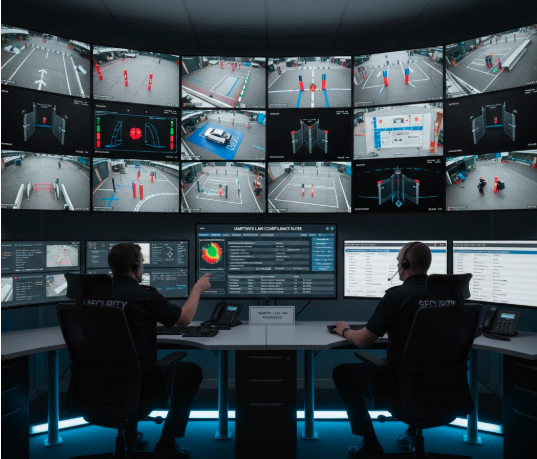
The concept isn’t new, but it’s gaining renewed relevance as venues consider how to achieve the coordinated awareness that Martyn’s Law demands. A PSIM platform brings together data from disparate systems – video surveillance, access control, fire alarms, intrusion sensors and more – into a single operational view. Instead of security teams juggling multiple screens and protocols, PSIM software correlates events, applies workflows, and supports operators in making consistent, informed decisions.
Hexagon’s Safety, Infrastructure and Geospatial division offers one such system through its HxGN dC3 suite, which builds on the company’s long experience in command-and-control environments. Its PSIM software, HxGN dC3 Orchestrator, integrates information from security devices and management platforms, presenting it through a shared interface that also supports collaboration with emergency services and external stakeholders. In practice, this type of integration allows incidents to be assessed and managed quickly, while providing a digital record of actions taken – an increasingly important requirement under the new legislation.
While technology can’t eliminate uncertainty, it can help structure a response. Automated guidance within PSIM systems ensures staff follow defined procedures, even under pressure. In environments where incidents can escalate quickly – transport hubs, shopping centres, entertainment venues – that structure can make the difference between confusion and coordination.

Nigel Austin, physical security sales manager for the UK and Ireland at Hexagon (pictured right), explains, “There are different rules depending on the capacity of public premises or the event, ranging from a standard-duty premises (200 – 799 people, including staff) to an enhanced-duty premise (over 800). The smaller venues and events are only required to implement low-cost solutions with no physical measures. Enhanced environments, however, must provide monitoring in and around the facility and document public protection measures.”
The Security Industry Authority (SIA) will oversee compliance once the law takes full effect, with a transition period allowing organisations until April 2027 to adapt. For larger sites, this preparation will likely include reviewing existing systems and ensuring they can deliver the level of situational awareness and evidence-based reporting the law requires.
Hexagon’s PSIM approach represents one way of achieving this integration, but it’s not the only one. The wider principle remains the same: readiness depends on the ability to link people, processes and technology into a coherent whole. Whether through PSIM, unified command platforms, or improved cross-agency coordination, the goal is to ensure that when something does happen, the response is immediate, informed and effective.
“Martyn’s Law aims to eliminate the complacent mindset of ‘it won’t happen here’ when assessing the risks associated with public gatherings. Communities impacted by terror-related tragedies serve as a stark reminder that such incidents can and do occur,” Austin points out.
The venues and event operators that embrace this perspective early will not only be ready for the legislation but also better positioned to protect the communities they serve. Integration, communication and shared awareness will be key – and PSIM, in whatever form it takes, offers one route to getting there.
Author: Nigel Austin is the physical security sales manager for the UK and Ireland at Hexagon’s Safety, Infrastructure & Geospatial division.