




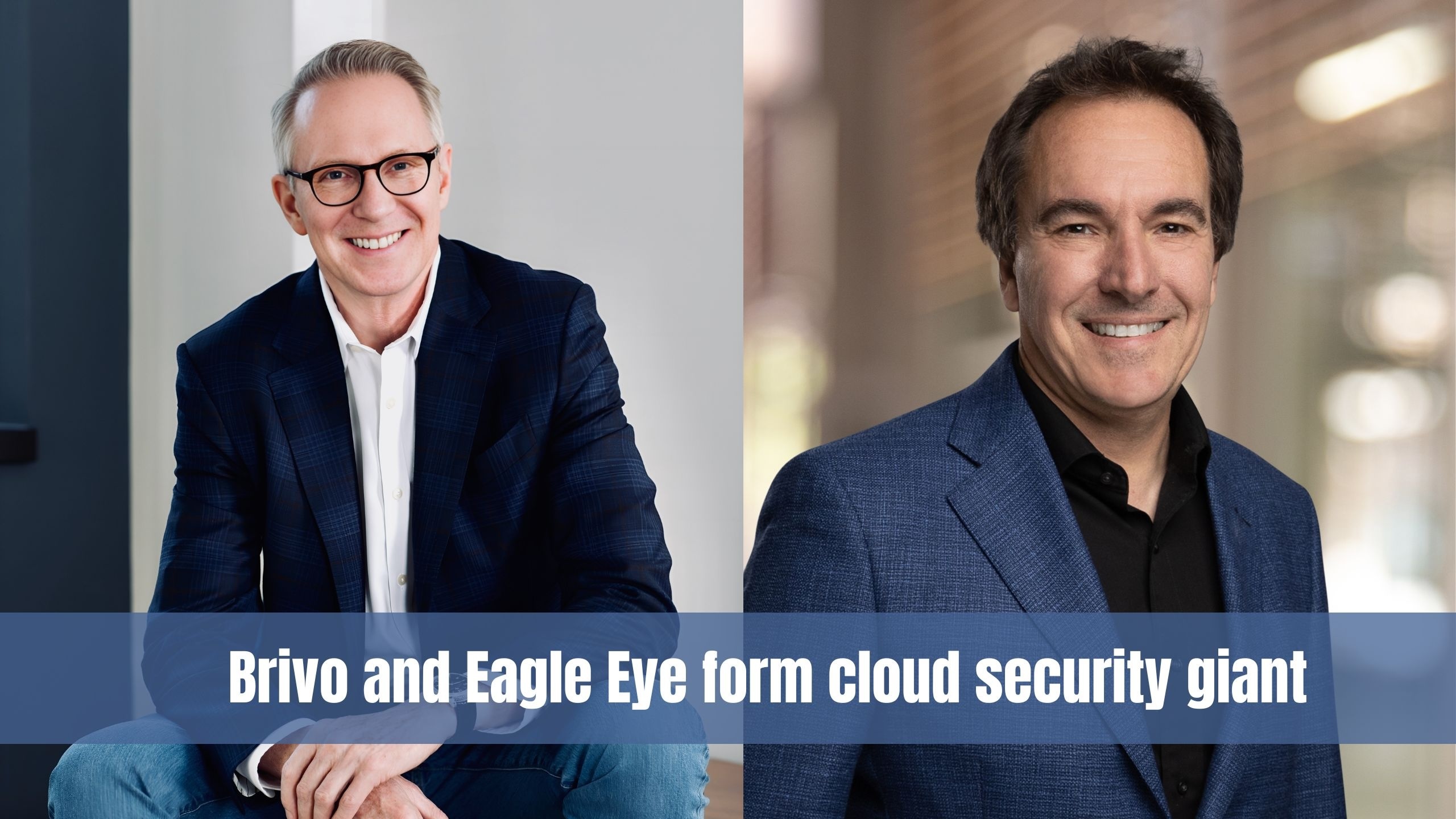
Brivo and Eagle Eye Networks have confirmed plans to merge, creating what they describe as the largest AI-enabled, cloud-native physical security company to date. Operating under the Brivo name, the combined business brings together access control, video surveillance, AI analytics and broader smart security capabilities within a single cloud platform.
For the security industry, this is less about scale for scale’s sake and more about direction. The deal reflects a clear shift towards fully unified, cloud-first security environments, at a time when end users are demanding simplicity, interoperability and intelligence rather than layered point solutions.
At the centre of the announcement is the Brivo Security Suite, positioned as a single, integrated environment that combines access control, video intelligence, intrusion detection and visitor management. Dean Drako, Chairman of Brivo and Founder of Eagle Eye Networks, said customers will benefit from “one support team, one business relationship, and one integrated cloud-native physical security solution,” reducing complexity across enterprise deployments.
The merged platform aims to centralise security operations across sites and regions, using AI-driven tools to support faster decision-making and more proactive risk management. For many organisations, particularly those managing large or distributed estates, this consolidation addresses long-standing challenges around system fragmentation and data silos.
Steve Van Till, Founder of Brivo and now President of the merged company, framed the move as a natural progression rather than a sudden change in direction, noting that the two businesses have shared ownership and strategic alignment for over a decade. He said the merger is designed to help customers and channel partners move more quickly, while providing resellers with a more efficient way to deploy and support cloud-based solutions.
Importantly for integrators and end users alike, the company has reiterated its commitment to an open platform approach. Existing integrations with third-party video and access control solutions will continue, signalling that this is not a closed ecosystem play, but one that aims to sit at the centre of increasingly interconnected security environments.
By combining cloud access control and AI-driven video under one operational roof, Brivo is positioning itself as a platform provider rather than a product supplier. For the wider market, this raises the bar on what a unified security platform should deliver, not just in terms of features, but in how seamlessly those features work together.
Company profiles
Brivo has been a central player in the shift to cloud-based access control, pioneering a software-as-a-service model that now secures over one billion square feet of property across 80 countries. Its platform is widely used in commercial and multifamily real estate, and its broader ecosystem includes more than 100 third-party hardware integrations, supported by open APIs. In recent years, Brivo has expanded its focus on AI, embedding capabilities such as anomaly detection, facial detection, video analytics and natural language tools across its platform and operations.
Eagle Eye Networks, founded in 2012, is recognised for its cloud-native approach to video surveillance. Its Cloud VMS is designed specifically for scalability and AI-driven analytics, with a strong emphasis on cyber security, flexible subscription pricing and open RESTful APIs. Eagle Eye has built a global reseller and integrator network, with customers using its platform not only for security, but also for operational insights across a range of sectors.
Looking ahead
With Dean Drako taking on the role of CEO and Steve Van Till serving as President, the merged company will operate from dual US headquarters in Bethesda, Maryland and Austin, Texas, alongside international offices in Europe and Asia-Pacific. How effectively Brivo can integrate these capabilities into a genuinely seamless experience will be closely watched by the industry.
What is clear is that this merger reflects where physical security is heading: towards unified, intelligent, cloud-native platforms that support both security and operational outcomes. For manufacturers, integrators and end users, it marks another step in the ongoing transformation of the sector, and raises important questions about how future security systems will be designed, deployed and managed.