
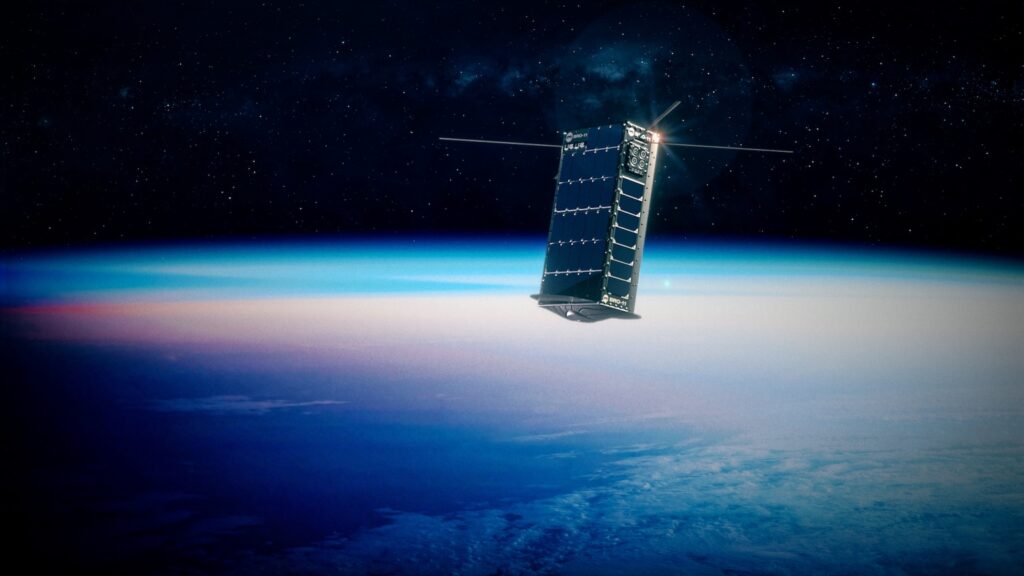
Unseenlabs, a French company specialising in space-based radio frequency (RF) detection, has signed a three-year agreement with the European Space Agency (ESA) to supply RF data to the Copernicus Earth Observation programme. This marks the first time RF intelligence has been integrated into the Copernicus Contributing Missions (CCM) framework.
Funded by the European Commission, the agreement categorises Unseenlabs as an Emerging European Earth Observation (EO) data supplier. It expands Copernicus’s scope beyond its traditional optical and radar data sources, introducing RF as a complementary layer for situational awareness.
From a physical security perspective, the addition of RF intelligence to Copernicus may not appear immediately relevant to installers and integrators. However, as demand grows for joined-up systems capable of detecting and responding to threats across different environments—particularly in transport, critical infrastructure and border security—access to space-based RF data could prove valuable.
Understanding the Technology
Unseenlabs uses a proprietary detection method based on single-satellite architecture. Its system can geolocate and characterise any RF-emitting source on Earth, day or night, in any weather. This includes vessels operating without their AIS (Automatic Identification System) turned on—an issue often linked to unauthorised activity such as illegal fishing, smuggling, or attempts to evade maritime sanctions.
The company’s satellite network is already being used to support maritime domain awareness. Now, by joining the Copernicus programme, its data will be available to more institutional end-users across Europe.
For organisations deploying surveillance systems in coastal or remote environments, the availability of RF data introduces another input that can be integrated into broader monitoring platforms. Combined with video, radar, or acoustic technologies, RF intelligence can help verify or flag activity that would otherwise be difficult to detect.
Why Now
The timing of this agreement is important. In recent years, the EU has placed greater emphasis on protecting critical infrastructure and securing maritime borders. As part of this, there is increasing interest in technologies that provide persistent, wide-area coverage. RF satellites fit this requirement well.
The move also reflects a shift in how satellite data is valued—not just for environmental monitoring, but also for supporting security and law enforcement operations. While Copernicus has traditionally focused on climate and land use, ESA and the European Commission are broadening its remit to include more real-time threat intelligence.
Unseenlabs’ contract falls under Category 1 of the Copernicus Contributing Missions programme. Over time, the company aims to be listed under Category 2, which includes established EO data providers.
As part of its proposal, Unseenlabs also referenced future capabilities from its next-generation satellite constellation, which is expected to offer greater resolution and faster revisit rates.
The agreement was announced at the Living Planet Symposium 2025 in Vienna, ESA’s key event for the Earth observation community. A formal certificate ceremony took place in the presence of Simonetta Cheli, Director for Earth Observation Programmes at ESA, and Mauro Facchini, Head of Earth Observation at the European Commission’s DG DEFIS.
This formal recognition underlines the growing role of RF data in public policy, enforcement, and emergency response.
What It Means for the Sector
While satellite RF detection remains a specialist tool, the fact it is being adopted at EU level suggests broader applicability in the near future. For security integrators and system designers working on high-risk, large-scale, or remote sites—particularly those linked to transport, energy, or national infrastructure—this type of data may become a component of future service offerings.
The integration of RF detection into the Copernicus programme is a step toward a more connected security landscape. As sensor networks evolve, security professionals will increasingly be expected to understand how data from multiple layers—whether physical, digital, or now orbital—can work together.