






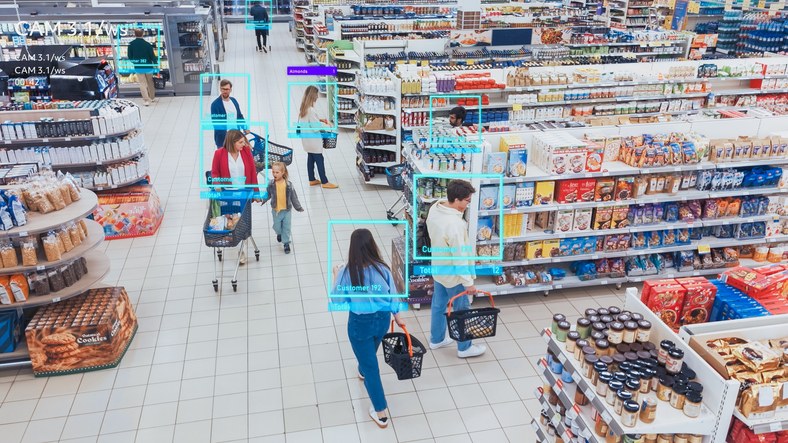
Waitrose is rolling out enhanced CCTV systems across its UK stores as part of a wider retail sector push to deter theft and improve safety. The supermarket has reportedly confirmed that live-feed cameras and display screens are now in place at more than half of its 315 branches, with installations continuing nationwide.
The system, reported by The Grocer and The Express, greets shoppers with large monitors at store entrances showing their image in real time, alongside a prominent warning that recording is in progress. Waitrose said the initiative is designed to deter theft by making surveillance more visible, while footage is only shared with police when specifically requested to support investigations.
The cameras have also been installed in higher-value and higher-risk areas, including alcohol aisles, fresh meat counters, and self-checkout zones. These so-called “VAR-style” displays, echoing football’s video assistant referee system, are increasingly common in supermarkets and are seen as a simple way to remind shoppers that monitoring is active.
A company spokesperson stressed that all data is managed in line with UK data protection laws. Unlike biometric systems, the cameras are designed purely as a deterrent rather than to analyse behaviour or identify individuals.
The investment comes amid rising concern over retail crime. The British Retail Consortium has reported record levels of theft and abuse against staff in 2024–25, warning that crime is “blighting every community” (BRC data). Retailers have argued that the trend is creating financial losses and putting frontline employees at risk, prompting a wave of new technology deployments.
Other supermarket chains are also testing more advanced systems. Sainsbury’s has begun a trial of facial recognition in partnership with Facewatch, a security firm that provides alerts when individuals identified as repeat offenders enter a store. The technology is now active in its Sydenham superstore and Bath Oldfield Road branch. Sainsbury’s said the aim is to support staff in tackling persistent offenders and to build a collaborative approach with neighbouring retailers.
These different strategies illustrate the spectrum of responses supermarkets are exploring. Waitrose is focusing on deterrence through transparency, while Sainsbury’s is trialling more targeted identification tools. Both approaches underline the pressure retailers face to maintain safe environments for customers and staff, while raising questions about where the balance lies between security and privacy.
Industry observers suggest visible surveillance is proving popular because it reassures staff and customers while signalling compliance with data protection requirements. Facial recognition, by contrast, continues to attract scrutiny from civil liberties groups. How shoppers respond may ultimately shape which systems gain broader adoption.
For retailers, the business case is becoming difficult to ignore. Theft and abuse are creating operational and financial pressures at a time when margins are already tight. Security upgrades are increasingly viewed as part of wider resilience planning, sitting alongside investment in logistics, staffing, and digital transformation.
The shift is also opening opportunities for the UK’s security technology sector. Integrators and suppliers are seeing demand for solutions that combine effectiveness with ease of use on the shop floor. Live-feed displays, AI-assisted monitoring, and collaborative crime-prevention platforms are now active areas of development, though adoption varies depending on cost and public acceptance.
Waitrose’s decision to accelerate its programme suggests the supermarket views visible deterrents as an effective model. With more than half its estate already covered, further installations are expected in the months ahead. Analysts note that this makes the company one of the most significant adopters of prominent CCTV in UK food retail.
Whether others follow the same route may depend on the outcomes of Sainsbury’s facial recognition pilots and on how regulators respond to the use of biometric technologies in everyday shopping environments. What is clear is that reliance on traditional CCTV alone is no longer seen as sufficient.
As crime levels rise, UK supermarkets are reshaping their surveillance strategies to be more prominent, targeted, and integrated. For the security industry, retail remains a key proving ground for technologies that could later spread to other sectors facing similar challenges, from transport to healthcare.